

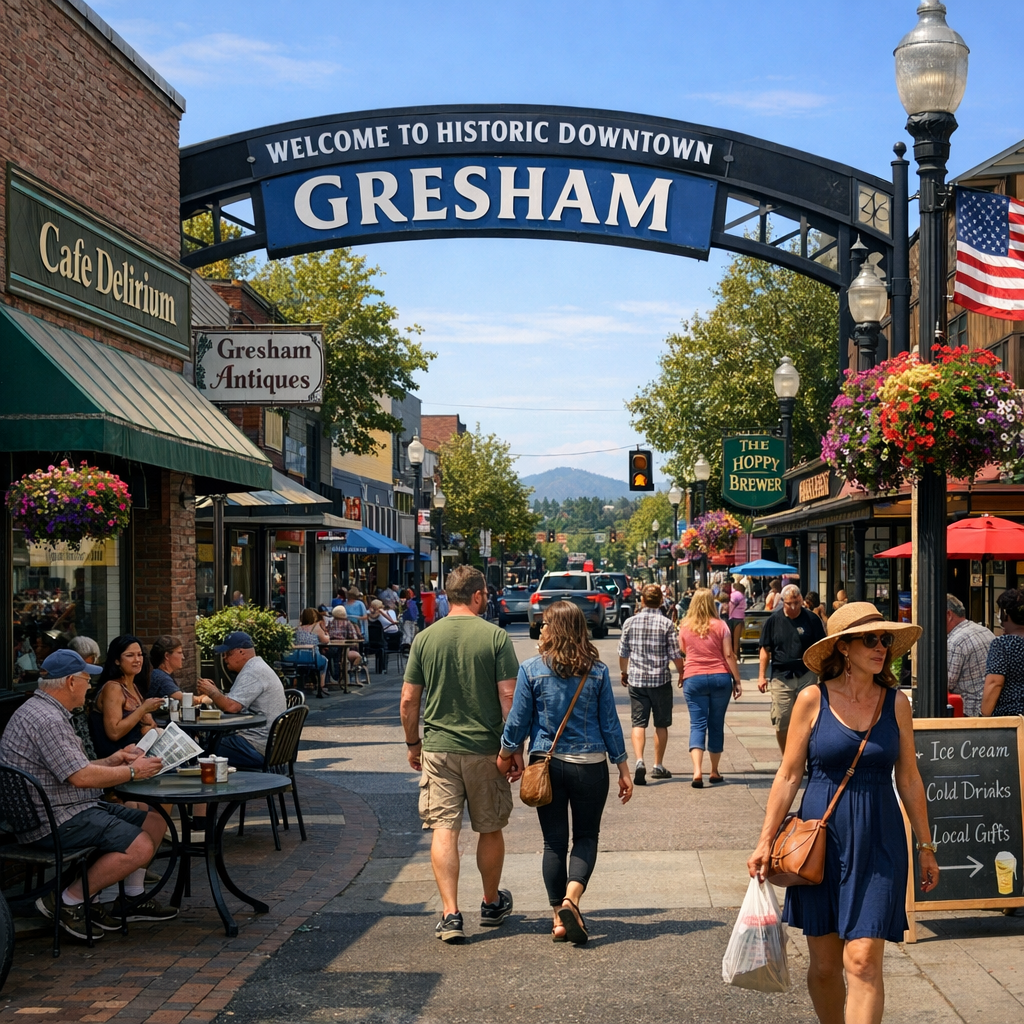
Gresham, Oregon, has experienced significant economic developments in recent years, reflecting both growth and challenges. As the state’s fourth-largest city, Gresham’s economic landscape is shaped by various factors, including population dynamics, housing trends, and business investments.
Population and Employment Trends
As of 2026, Gresham’s population is approximately 113,144, marking a modest annual growth rate of 0.3%. This steady increase contributes to the city’s expanding labor force and consumer base. However, since 2007, employment growth in Gresham has lagged behind the broader Portland region. Notably, sectors such as private education, health care, social assistance, and wholesale trade have seen growth in Gresham, while others like real estate and administrative services have declined.
Housing Market Dynamics
The housing market in Gresham remains competitive. In March 2026, the median sale price of homes reached $482,000, reflecting a 3.5% increase from the previous year. Homes typically sell within 36 days, indicating strong demand. The rental market has also seen growth, with median rents around $1,600 per month, up 7% year-over-year. These trends highlight the city’s appeal to both homebuyers and renters.
Business Investments and Developments
Gresham has attracted significant business investments, contributing to its economic vitality. In October 2025, Gresham Ford opened a new Commercial Service Building, enhancing support for local businesses and commercial fleets. Additionally, the city adopted a $381 million Urban Renewal Plan in September 2025, focusing on downtown development, including parks, transportation, and housing, to foster future growth and business opportunities.
Challenges and Future Outlook
Despite these positive developments, Gresham faces economic challenges. Oregon’s per capita income growth has fallen below the national average, raising concerns about increasing financial pressure on households. Factors such as an aging population and rising living costs contribute to this trend. Addressing these challenges requires strategic planning and investment in workforce development, infrastructure, and affordable housing.
In conclusion, Gresham’s economic landscape is characterized by growth and opportunity, tempered by challenges that necessitate proactive solutions. Continued investment in infrastructure, support for local businesses, and initiatives to attract new industries will be crucial in ensuring the city’s sustained economic health and prosperity.